A stay at the Terence Bay A-Frame unfolds slowly, like the tide just beyond its windows—unhurried, rhythmic, and deeply tied to the landscape. From the moment you arrive, the experience feels less like checking into a place and more like stepping into a carefully framed moment between landscape and ocean.
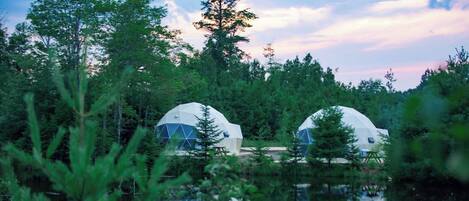
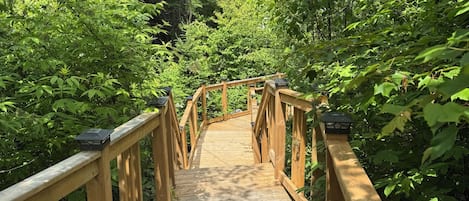
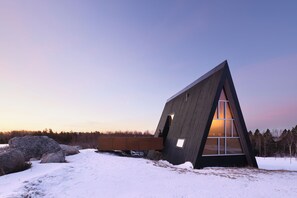
The approach sets the tone. The road narrows, the trees grow taller, and the air shifts—saltier, quieter, cooler. When the A-frame comes into view, it feels both iconic and understated: a sharp triangular silhouette rising from the natural terrain, clad in warm wood that weathers beautifully against the coastal elements. The architecture speaks in simple, confident lines.
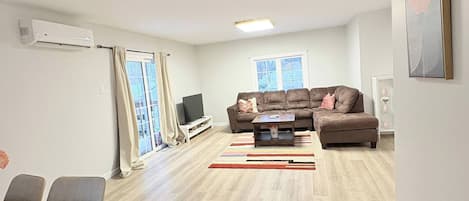
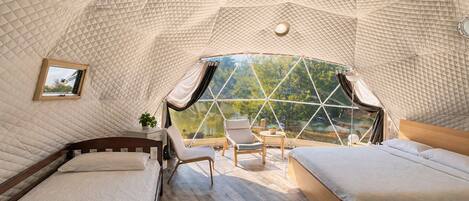
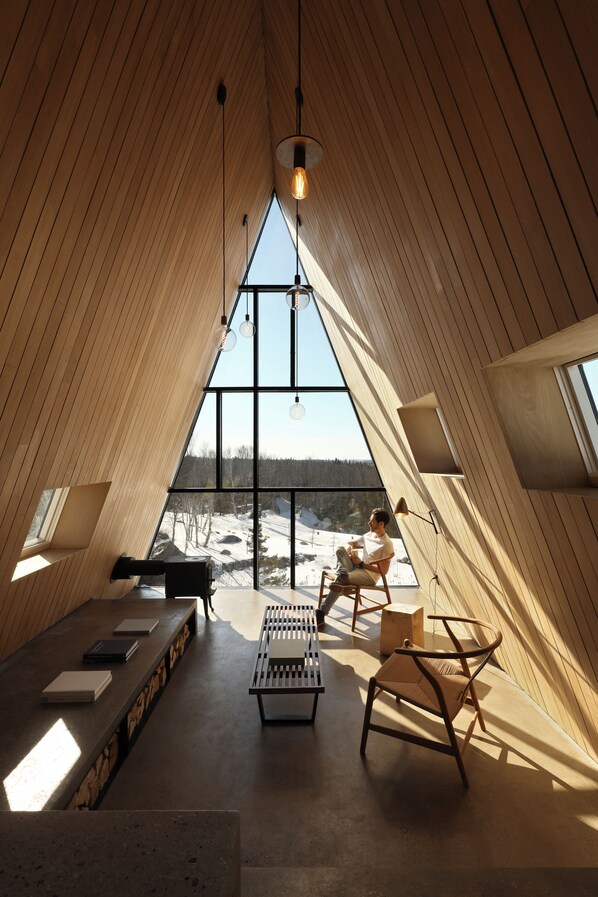
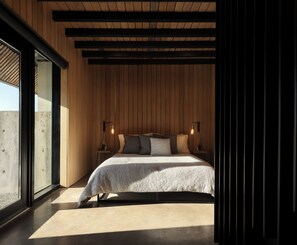
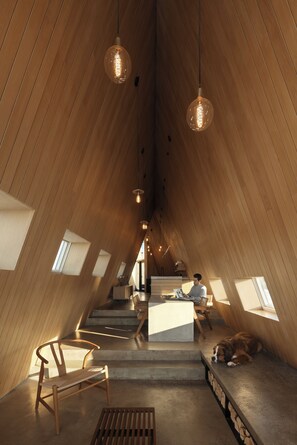
Inside, the atmosphere is immediately calming. The geometry of the A-frame creates a sense of enclosure without confinement. Light pours in through the front glazing, shifting throughout the day—soft and diffuse in the morning, crisp and bright by midday, and golden in the evening. The interior palette is restrained and tactile: natural wood, soft textiles, matte finishes. Every detail feels intentional but never over designed.
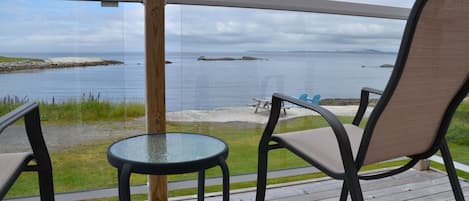
Mornings begin quietly. The kind of quiet that isn’t empty, but full—wind moving through trees, distant waves rolling in, the occasional call of seabirds. Coffee tastes better here, whether you’re sitting at the dining table or wrapped in a blanket on the front deck. The view draws you outward, even when you’re perfectly comfortable staying inside.
The connection to the outdoors is constant. Large operable panels or doors open the living space to the front patio, blurring the boundary between inside and out. On warmer days, the A-frame breathes—air moves freely through the space, carrying the scent of ocean and pine. On cooler days, the interior becomes a cozy refuge, with the structure itself amplifying the sense of warmth and shelter.
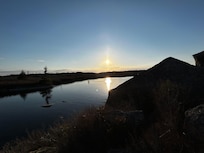
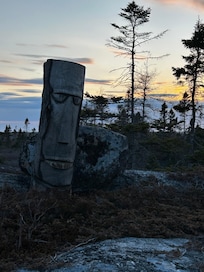
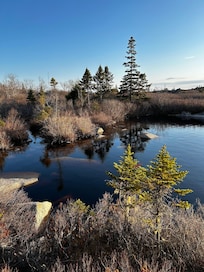
Time behaves differently here. Without the usual distractions, the day organizes itself around simple pleasures. A walk along the nearby shoreline reveals a rugged, unpolished beauty—rocky edges, tidal pools, driftwood scattered like sculpture. The water shifts in color depending on the sky, sometimes slate grey, sometimes deep blue, sometimes reflecting the pink and orange of sunset.
Afternoons invite a slower pace. You might read for hours without noticing time pass, or sit watching the light move across the interior surfaces. If there’s a fireplace or stove, it becomes a natural focal point—something to gather around as the temperature dips. The A-frame’s shape enhances these moments, drawing attention upward, making even stillness feel dynamic.
As evening approaches, the experience deepens. The low sun filters through the front glazing, casting long, angular shadows that echo the building’s form. Cooking becomes part of the ritual—simple meals that feel elevated by the setting. There’s something about preparing food in a space like this that makes it more intentional, more grounded.
Night at the A-frame is perhaps its most memorable quality. With minimal light pollution, the sky opens up in a way that’s increasingly rare. Stars appear in layers, and if you step outside, the darkness feels expansive rather than isolating. Inside, the glow of interior lighting is soft and warm, contrasting with the cool tones of the night beyond the glass.
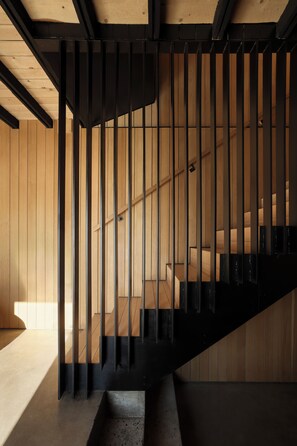
Over the course of a stay, small details begin to stand out. The way materials age and respond to light. The acoustics of the space—how sound is softened, how silence is held. The way the building frames views, not just outward but inward as well, encouraging moments of reflection.
What makes the Terence Bay A-Frame distinct, tt offers a distilled experience—of place, of design, of time spent intentionally. It doesn’t try to compete with its surroundings; it complements them, creating a dialogue between built form and natural context.
By the time you leave, there’s a subtle shift. You’ve adjusted to a different rhythm, one that feels both slower and more present. The memory of the stay lingers not as a series of events, but as a feeling—a quiet, grounded sense of having been somewhere that allowed you to simply be.
And long after you’ve returned to everyday life, that triangular silhouette, set against trees and sky, tends to stay with you.